


(This was originally written as an essay for Shelf Respect.)
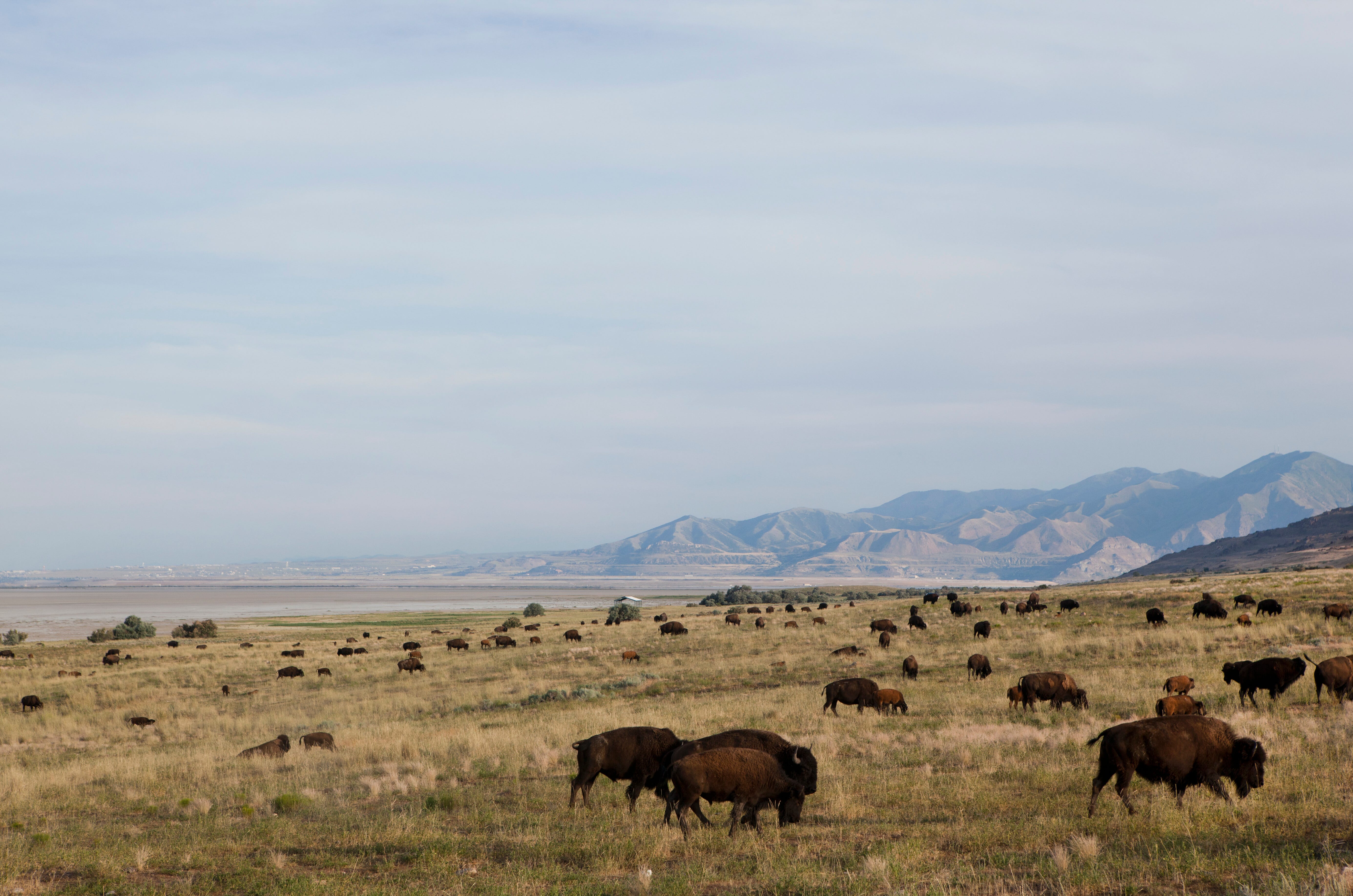
Near where I live, there’s a buffalo farm, which is always a strange sight to see at the corner of two state highways, especially in the South; these iconic creatures of the wild frontier now politely wandering a pasture like it’s a daycare.
The first time you pass, it seems like a local curiosity, like an ostrich farm or Martin Freeman in Black Panther. But if you look a little closer, you’ll notice that the farm is part of a conservation effort to return the buffalo to their native range and to population levels not classified as endangered.
The signage would have you believe that Americans are committed to the protection and thrivance of the American bison, but places like this only exist because after coming over from Europe, we almost hunted the Buffalo into oblivion. It’s conservation as penance or preservation as apology tour, but depending on who is narrating, we’re either doing a good thing now or apologizing in action because we did a bad thing then.
But that’s the thing about narration: you can’t really trust it unless you know who’s holding the pen. It’s a reminder about the reliability of stories we tell about ourselves and how they often skip the parts where we were the villain.
One thing books have always gotten right is that the narrator is never the whole story. They’re just the person the author deputized for the job. In literature, unreliable narrators are treated with disdain, as if they are willful little Lokis, mischievously skewing the truth simply because they enjoy watching the furniture of reality slide around the room.
But unreliable narrators aren’t usually unrepentant liars; they’re survivors telling you the version of the story they can live with. They’re building a raft out of selective memory and hoping you’ll climb aboard without looking too squarely at the missing or warped planks. As the reader and ultimate arbiters of truth, we judge them for this, while at the same time carrying around our own carefully edited account of things like our relationships, our childhoods, our successes and failures, all dipped in an honorable glaze of sepia and all as reliable as a broken clock.
Recently, my car needed work, so after dropping it off in the morning, I scheduled a Lyft from the mechanic to my office. The driver was an elderly woman, and when she arrived, I noticed that she had a co-pilot in the form of her husband. And very quickly, I came to understand that the driver was there to drive, and the co-pilot was there to talk.
I’m not normally a talker with people I don’t know, and especially not in car rides, and especially not in the morning. But the man had an enthusiasm for discussion that was hard to resist. Each question or statement radiated with the confidence of someone who had clearly never once lost a conversation to silence.
But there was something else about him, the posture, the volume, something that felt eerily familiar, though I couldn’t place it at the time. It wasn’t a déjà vu of the situation as much as it was of this specific person.
Like me, he’d lived briefly in Alabama. Like me, Covid had chased him back home. We approached the topic of politics without getting specific, and we made connections over shared acquaintances, friends, and locations. The entire interaction was warm and familiar despite the incumbent unfamiliarity.
When we reached my office, he got out of the car to shake my hand, and as they pulled away, we nodded solemnly at each other like we’d just survived something important together. It was only then, watching the taillights vanish, that I realized why he felt familiar: he looked and moved and laughed exactly like my grandfather.
The older I get, the more I’m told about how much I resemble him. He was my mother’s father, and his name was Don. My sister and I called him the standard-issue southern term “Papaw,” just as we did our father’s father in an incredible failure of imagination.
As a child, he was mythical in the way that any extended relative adult who shows any interest in you can be. He’d played football at Georgia Tech, back when the helmets barely protected anything, and concussions were considered prescriptive for character building. The story goes that as a Senior, the Freshmen were hazed by being forced to wake him up from his nap, such was his wrath when being awoken by forces that were not God or Circadian.
Growing up, we saw him only occasionally. For most of my life, he lived in St. Petersburg, presumably as the youngest man in a retirement community, which feels like the cosmic joke he loved being in on. On our visits, I remember sleeping in a trailer, then waking up to take walks with him under a sun that felt like judgment. We’d spend our days listening to retirees sift through their pasts, eagerly panning for story gold in the rivers of their fading memories. And even though it was the 90s, a few of them still saw fit to talk shit about Jimmy Carter. As my sister and I listened, we pulled oranges from trees and swore that we could taste the absorbed sunlight within. Before bed, we sat on porch swings and would watch the sunset spill itself across the sky in long, slow ribbons of pink light.
It was on one of these trips that I remember him telling me a joke I still smile about whenever I pass a cemetery: “You know the thing about cemeteries? (comedic pause) People are absolutely dying to get in there.” It’s been over 30 years since he told me that and I still hear his laugh behind the punchline, both a punctuation and invitation to share in the humor.
I have his same wheezy laugh. His emotional iciness and elusiveness, too. And while I do not know if traits like argumentativeness and devil’s advocation are genetic, his legacy for these exist deep within me. He was charming and smart and witty and drew from a deep well of intellectual promiscuity. But even as a kid, I could tell that despite his mythos, there was a complication in his presence. Some unspoken tension with a fossil record all its own. Obvious to everyone in attendance except (maybe) my sister and (definitely) me.
Every Christmas, one of the items on my wish list was a request that he visit. And sometimes he did. But whenever he did, that unspoken tension surfaced, which made each visit precarious; fun but foreboding. Like finding warmth in an arsonist’s flame. Relationships are complex enough as it is, but deep within the historic branches of a family tree, even more so. There are hurts and pains so elemental and instructive in the condition of a relationship, but to try to explain or understand them is like trying to reconstruct a faded chalk outline of a crime committed years ago.
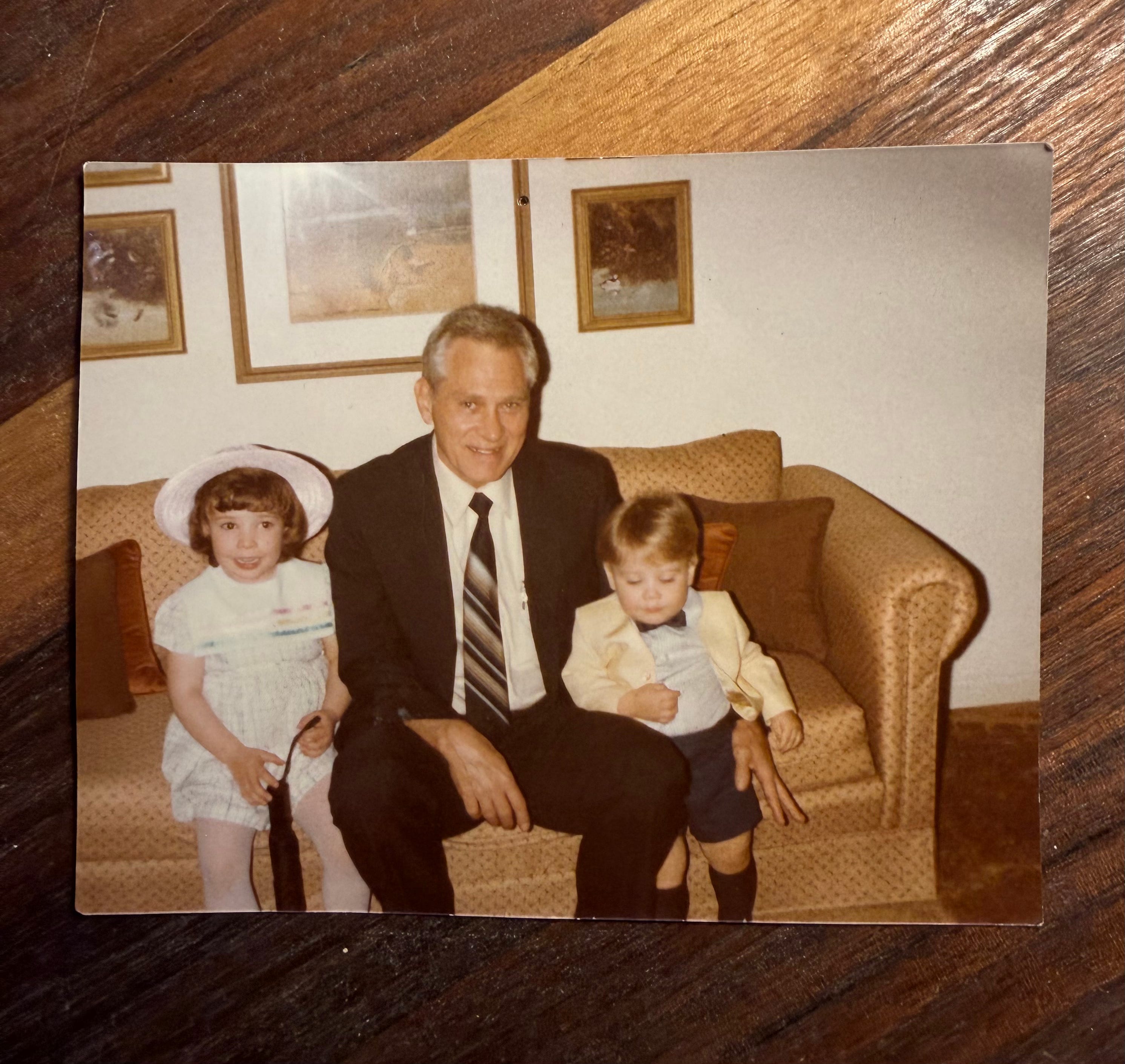
A core memory of mine isn’t as much a memory as it is a story.
We were on a family trip to Disney World, and when we arrived, Don surprised us by crashing the trip. I was delighted, my parents less so. We were already pushing the feasibility of familial civility by the four of us sharing a small room for the better part of a week. Now adding another person, one who actively smoked and dismissed smoking restrictions as “mere suggestion,” was not going to do the vibe any favors.
Early into the trip, my dad announced a work emergency that required his presence. We packed up and hugged Don goodbye as we went our separate ways and began the long drive home. But before we’d even left the city limits of Orlando, my dad checked his pager, and miraculously, the emergency had been resolved.
My sister and I were, of course, thrilled to get more time at Disney World, but I was personally saddened because in this pre-cellphone reality, we had no way to reach Don. I convinced myself it was fate, or misfortune, or just God being his usual mysterious self.
There are parts of my grandfather’s story I didn’t understand until adulthood, when the tension and subtext of conflict could finally be explained. My grandmother (his wife, my mother’s mother) had been broken down by life, her marriage to Don and probably a thousand other small but significant devastations, leading to her reliance upon the peaceful numb of alcohol, which meant that as a parent, she was often functional only in the way a crash test dummy is functional in a car.
My father once told me about a time when he was a teenager dating my mother and he’d taken out the trash at her house and saw dozens and dozens of empty cough syrup bottles, which is the sort of detail you don’t fully process until you’re older and your sense and scope of tragedy has matured and become refined to the nuanced calibrations of quiet trauma.
It was in this situation that Don left his wife, my mother, and her siblings, all when they were just kids. As far as why, I never asked, and he never explained. Maybe he wasn’t equipped. Or able. Or maybe it was his own selfish pursuit of personal happiness. The narration shifts depending on who’s telling the story and what they need the story to accomplish.
For a while, I held this information at arm’s length, like a loose puzzle piece I wasn’t sure belonged to my set. Even then, I didn’t let the truth challenge the myth and I wasn’t mature enough to connect my mother’s extreme anxiety and fear of worst-case scenarios to this abandonment. I just thought she worried too much.
It’s small misunderstandings like these that are the difference in classifying facts about your parents as “miscellaneous trivia” or “personality quirks” instead of “important things that fundamentally shaped the people who raised me.”
Many years later, after our almost-canceled Disney World trip, I learned the truth about the story.
There had been no emergency. My parents staged the whole operation so they could get him to leave. He was argumentative. He smoked constantly. His gravitational pull was too strong for a room that small to contain without casualties.
They even colluded with the hotel staff, explaining the situation and asking them not to give away our room, even though we “checked out” for all of, like, 47 minutes.
When I learned this as an adult, I wasn’t angry. I was disoriented, as you are when a childhood memory tilts, like a painting hung slightly askew. It’s the same picture, but suddenly the frame no longer fits.
Not because my parents were revealed to be unreliable narrators, but because I realized my memory wasn’t a memory. It was a fairy tale written by an eight-year-old who still believed things happened to people, and not because of people.
----
When Don died in 2018, I was asked to write his obituary, a process that became deeply emotional for me as I mourned our lack of relationship and felt shame for my role in it.
I sat at my laptop for hours, the cursor blinking patiently and waiting for me to decide which version of him deserved to live on paper. What do you write about someone you loved but barely knew? Someone who was myth and man, grandfather and ghost?
In my final draft, I wrote about his hometown and his football scholarships and his career, and how he loved to dance and how he never met a stranger. I did not write about the Disney fake-out, the long silences, or the prickly edges. I did not write about his failures because obituaries are a kind of conservation space of unreliable narration meant only for the parts of a life that fit neatly into the serene pastures of paragraphs.
Half of my beard went white during COVID, and the other half is in the early stages of a full-on rebellion against youth. I’m very self-conscious about it. I’ve even bought coloring and have contemplated addressing it, but my vanity about vanity always gets the better of me.
My mother has remarked about how much I resemble him, and now Ashley does too. It’s the growing whiteness of my beard, I know, and the shared genetics, though, I worry it’s a resemblance of temperament creeping in, too. The prickliness, the retreating instinct, the suspicion that I might be someone who’s easier to love from a distance, or the way I sometimes prefer the clean silence of being alone to the messy wonder of being vulnerable and known.
Whenever I think about my grandfather, as I now move through the world with a face that increasingly resembles his, I wrestle with finding the truth amid all the versions of him and narrations I’ve gathered over the years:
Why did he abandon my grandmother, my mom, my aunt, and my uncle?
Why didn’t he want more of a relationship with me?
Why didn’t I want more of one with him?
Is it because that relational reticence is also in me, ticking like a time bomb and eager to go off when I least expect it and when those I love need me most?
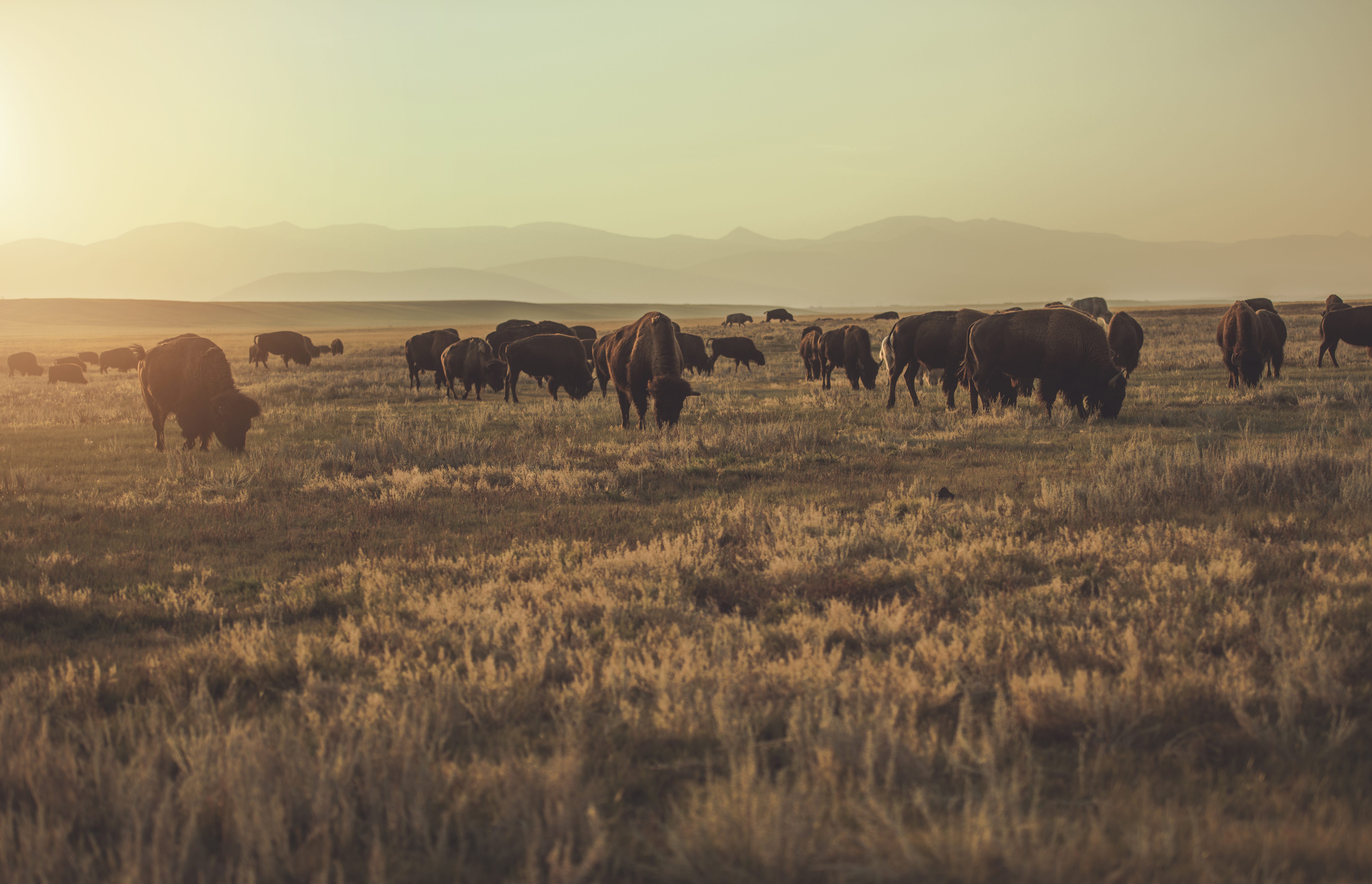
But in all this consideration, the truth feels less like a verdict and more like a buffalo farm: something to be carefully maintained, gently curated, and all of it built on the ruins of earlier mistakes.
Like those Floridian retirees, we tell and retell our own stories to believe and remember and remind, but mostly to help us endure. We keep the parts that let us hold people close, even if they drifted. We revise the chapters that hurt too much to read plainly. We let the narration of memory be a soft-focus camera, even when the lens is smudged.
And maybe that’s why the buffalo still roam their fenced-in pasture, and why my grandfather still wanders through my thoughts and ride share experiences like a familiar ghost: because unreliability in the narration of our memories isn’t something to fix. It’s the mechanism that provokes the grace inherent to loving people who were never just one version of themselves.
If there’s one thing I’m learning as I, too, age, it’s that memory is less a vault and more a pasture, because the stories all roam and drift. And sometimes, the characters within them circle back, grazing old ground as if hoping it’s grown softer with understanding in their absence.
My grandfather is one of those wandering shapes; part myth, part wound, part man I knew just well enough to miss incredibly. The buffalo are the same: a living reminder that we ruin things, and then we try to fix them, and both facts can be true at the same time. I hope both facts can be true at the same time.


